
Most people who want to know how to build a daily skincare routine start by looking at products. The routine matters more. A cleanser, a treatment, a moisturiser and a sunscreen, used in the right order every day, will do more for your skin than a shelf of ten serums used when you remember.
This guide gives you that routine: a morning order, an evening order, layering rules that stop pilling and stinging, and a simple way to add new products without losing track of what works.
Why most skincare routines fall apart after two weeks
A routine usually starts on a burst of motivation. You buy a cleanser, a toner, two serums, an eye cream, a mask and an oil, and for a week or so you work through all of it. Then a busy morning arrives, the routine takes fifteen minutes you don’t have, and you skip it. Skipping once makes skipping twice easier.
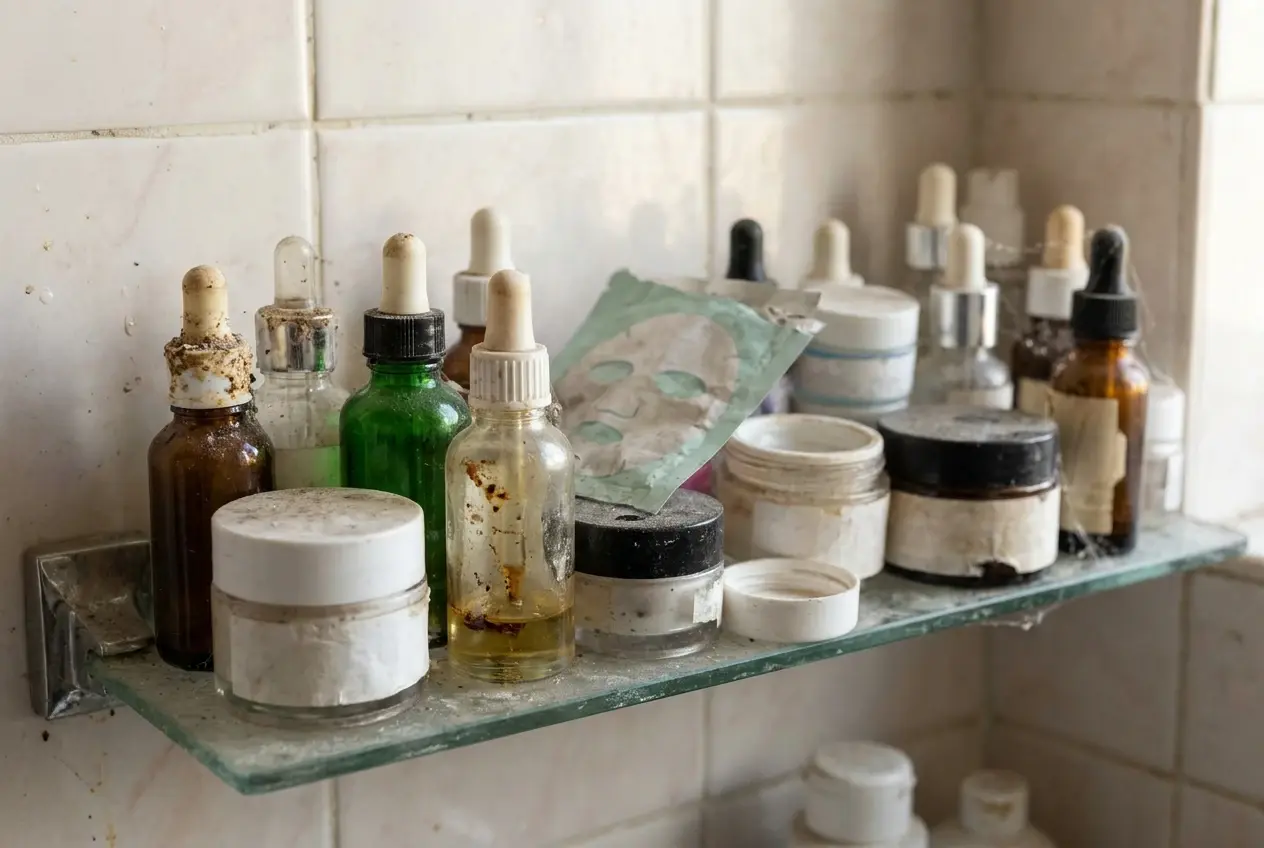
The routine failed because it was too long to survive an ordinary week. Skin responds to consistency over weeks and months, so a routine that takes ninety seconds and happens daily will beat an elaborate one that happens on weekends.
A long routine also hides problems. If you start six new products at once and your skin breaks out or turns red, you can’t tell which one caused it. You end up stopping everything, and you are back where you began with a lot of half-used bottles.
In my experience, fewer steps done daily beat a long shelf used rarely, and the rest of this article is built around that.
The four steps that do the real work

Everything in this routine comes down to four jobs.
- Cleanse: remove oil, sweat, sunscreen, makeup and the day’s dirt so the next products can reach your skin.
- Treat: use one active product aimed at your main concern, such as uneven tone, breakouts, dullness or fine lines.
- Moisturise: hold water in the skin and support the skin barrier, which is the outer layer that keeps irritants out and moisture in.
- Protect: apply sunscreen every morning. Daily sun exposure is the biggest outside cause of visible skin ageing, and it can undo the work of every other product.
Toners, essences, face oils, eye creams, masks and exfoliating treatments are optional. Some people like them and some skin benefits from them, but none of them is needed to start. Get the four steps happening daily first, and treat anything else as an extra you add later, one at a time.
Your morning order, from first splash to sunscreen
Mornings are where routines get squeezed, so this one is short.
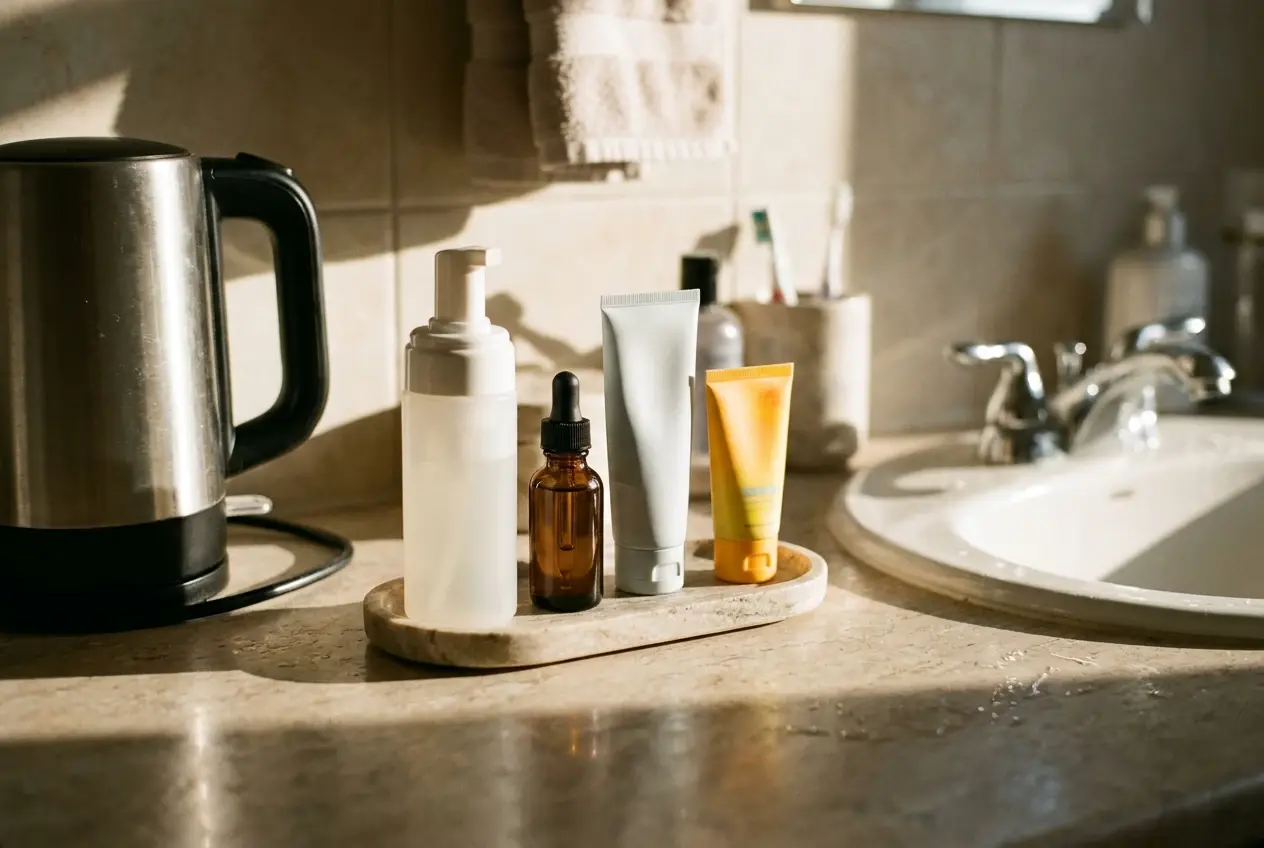
- Cleanse, or just rinse. If your skin feels comfortable after sleeping, splashing with lukewarm water is enough. If your skin is oily or you used a heavy night cream, use a gentle cleanser.
- Treat. A vitamin C serum is a common morning choice because it is an antioxidant that works alongside sunscreen. If you don’t use one, skip this step in the morning and keep your treatment for the evening.
- Moisturise. Use a light cream or lotion. Oily skin can use a gel formula, and dry skin may want something richer.
- Sunscreen. Use a broad-spectrum sunscreen of SPF 30 or higher, which is the general recommendation from dermatology bodies. Apply a generous amount, because most people use too little. This always goes last, as the final skincare product before makeup.
The whole sequence takes a couple of minutes once the products are lined up where you can reach them. Keep the bottles next to the sink or the kettle, wherever you already stand each morning, so the routine is attached to something you do anyway.
Your evening order, and what can wait until later
Evening is the more important cleanse of the day, because sunscreen, makeup, sweat and pollution have built up on your skin. It is also where active treatments fit best, since you aren’t going out into the sun afterwards.
- Cleanse. If you wore sunscreen or makeup, a gentle cleanser is the minimum. Some people double cleanse, using an oil or balm first and a water-based cleanser second, but a single thorough wash works for plenty of skin.
- Treat. This is the usual slot for a retinoid, or for a chemical exfoliant such as an AHA or BHA. Use only one of these on a given night when you are starting out.
- Moisturise. A slightly richer cream than your morning one is fine here, because you won’t be layering sunscreen over it.
Retinoids need a slow introduction. Start with two nights a week, then increase only if your skin stays comfortable. Dryness, flaking and mild stinging are common early on, and the answer is to slow down and use more moisturiser, not to push through.
What can wait: toner, eye cream, facial masks, face oils and any second or third serum. If you are curious about one of them, the one-product rule below tells you how to add it.
How to layer without pilling, stinging or wasting product
The general layering rule is to apply products from thinnest to thickest. Watery cleansers and serums go on first, creams next, and oils and sunscreen last. A thick product applied first creates a film that thinner products can’t get through.

A few habits prevent most problems:
- Use less than you think. A pea-sized amount of a serum or moisturiser covers the face. Pilling, where product rolls into little crumbs on the skin, is most often caused by too much product, not by a bad product.
- Give each layer a short wait. Thirty to sixty seconds is enough for most products to settle before the next one goes on. You don’t need a timer. Brush your teeth or fill the kettle in between.
- Press, don’t rub. Pat products into the skin with your fingertips. Rubbing drags layers against each other and can cause pilling, especially under sunscreen or makeup.
- Mind the damp-skin rule. Applying actives such as retinoids or acids to wet skin can increase how strongly they act and cause stinging. Dry your face fully before using them.
- Check silicone mixes. A silicone-heavy primer or sunscreen over a water-based moisturiser can ball up. If something pills every time, swap the order or change one of the two products.
Stinging that fades within a minute is usually mild. Stinging that lasts, or leaves redness or a tight, hot feeling, means your skin barrier needs a break. Move to the stripped-back routine described below.
Adding something new: the one-product-at-a-time rule
The rule is simple: introduce one new product at a time, and give it a few weeks before adding another.

Here is how to apply it:
- Patch test first. Put a small amount on your inner forearm or behind your ear for a few days and see if any redness, itching or bumps appear.
- Start slowly. Use the new product every second or third day for the first week or two, even if your skin feels fine. Increase to daily only if your skin stays comfortable.
- Wait before judging. Most products need several weeks of regular use before you can see whether they help. Retinoids and other treatments for tone and texture often take longer than that.
- Keep a note. Write the product name and the start date in your phone. If your skin reacts later, you will know exactly what changed and when.
- Add the next product only after this one is settled. That means it is either clearly working and tolerated, or clearly not worth keeping.
This rule is slower than buying everything at once, and it is also the only way to know what is working. It protects your money too, because you only keep buying the products that have earned their place.
What to do when your skin acts up or your week falls apart
Both situations call for a shorter routine, not a longer one.
If your skin is irritated, such as red, stinging, flaking or breaking out more than usual, drop back to the basics. Use a gentle cleanser, a plain moisturiser and sunscreen in the morning. Pause every active treatment, including retinoids, acids and vitamin C, until your skin feels calm again. Once it does, bring treatments back one at a time and at a lower frequency. If irritation is severe, spreads, swells or doesn’t improve, see a doctor or dermatologist.
If your week is chaotic, keep a minimum version in your head:
- Morning: rinse your face, apply moisturiser if you can, and always apply sunscreen.
- Evening: cleanse and moisturise. If you only do one thing, make it removing sunscreen and makeup.
Missing a treatment night doesn’t set you back. Return to the routine the next day without doubling up to make up for it, because extra actives mostly lead to irritation. A routine you resume without guilt is the one you keep.
Choosing products for your routine without overspending
You don’t need to spend the same amount on all four steps. A sensible way to split the budget:
- Cleanser: it is on your skin for under a minute before being rinsed off, so a gentle, inexpensive one is fine. Look for one that leaves your skin comfortable, not tight or squeaky.
- Moisturiser: a simple, well-formulated cream does the job. Pricey jars rarely do more than good basic ones, and fragrance-free options are easier on sensitive skin.
- Treatment: this is where it makes sense to spend a bit more thought, since this product targets your main concern. Pick one active for one concern, not a serum that promises everything.
- Sunscreen: the best sunscreen is the one you’ll actually wear every day. If a texture feels greasy or leaves a white cast on your skin, you will skip it, so choose by feel as well as by label.
Before you buy, check what your skin type is, what you want to change first, and whether you have known sensitivities such as fragrance or particular acids. Read the ingredient list for those, and ignore marketing claims like “clinically inspired” or “dermatologist approach,” which have no fixed meaning.
When we recommend products on this site, we explain what each one is like to use and who it suits, so you can choose by your own skin and budget.
Pick one step of your routine to simplify this week, then read our honest reviews of cleansers, moisturisers and sunscreens to find what suits your skin.